


UL Listed vs. Non-UL Flexible Metal Conduit: How to Verify the Listing Before You Buy
Importers, distributors and electrical contractors are often asked to supply "UL Listed" flexible metal conduit. A line on a quotation or a PDF certificate is not the same as a verifiable Listing, though. This guide explains what UL Listed means for flexible metal conduit (FMC), how it differs from non-UL products, and how to check a supplier's claim yourself before you place an order.
What Does "UL Listed" Mean for Flexible Metal Conduit?
A UL Listing means the product has been tested by UL against the applicable safety standard, and that the manufacturing site is covered by ongoing follow-up inspections. Only then is the manufacturer authorized to put the UL Mark on the product. Three standards matter here:
-
UL 1 covers flexible metal conduit.
-
UL 360 covers liquid-tight flexible metal conduit (LFMC).
-
UL 514B covers conduit, tubing and cable fittings.
This is also why the term matters to inspectors. In installations governed by the National Electrical Code (NEC), flexible metal conduit and its fittings are required to be listed (see the listing requirements in NEC Articles 348 and 350), and local inspectors (the authority having jurisdiction, or AHJ) generally look for the UL Mark when they check the work.
Note that "UL Recognized" is a different category. It applies to components used inside other equipment and is not a substitute for a Listing on field-installed raceway.
UL Listed vs. Non-UL: What Is the Real Difference?
| Item | UL Listed | Non-UL or "UL-style" |
|---|---|---|
| Testing | Tested to UL 1 or UL 360 by a third party | Testing may be internal, or not independently verified |
| Factory oversight | Ongoing UL follow-up inspections | None from UL |
| Traceability | Searchable by File Number | No File Number to look up |
| Inspector acceptance | Generally accepted where listing is required | Often rejected on NEC-governed projects |
| Marking | UL Mark on product, reel or packaging | Wording such as "UL standard" without a Mark |
Non-UL conduit is not automatically unsafe, and it can be a reasonable choice in applications and markets where listing is not required. But where a project specification or code requires Listed products, it generally cannot be substituted.
How Can You Verify a UL Listing, Step by Step?
-
Check the marking. Look at the conduit, reel tag and carton for the UL Mark and the manufacturer's name. The exact marking layout varies by product, so ask for clear photos of real marking, not only a website image.
-
Ask for the UL File Number. It starts with the letter E followed by digits. A supplier with a genuine Listing can give you this immediately.
-
Search it in UL Product iQ. UL's public database lets you search by File Number. Confirm that the company name, factory location and product category match what the supplier is offering.
-
Match the scope. A Listing covers specific products, types and trade sizes. Check that the type (standard or liquid-tight) and the sizes you need are within the file.
-
Match the entity. If you are buying from a trading company, ask who the Listing holder and producing factory are, and how they relate to the seller.
-
Request supporting documents. A certificate or Listing information, the datasheet, and photos of the marking on your actual shipment.
For reference, Kaiflex UL 1 Listed flexible metal conduit is listed under UL File No. E238089, and the UL 360 liquid-tight flexible metal conduit series under E318661. Both can be searched in UL Product iQ. Our certification page lists our other certificates.
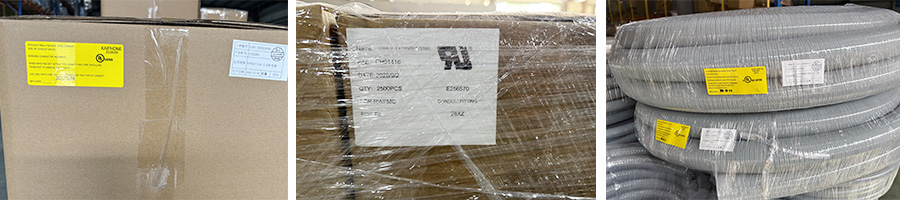
UL Mark and File Number on a Kaiflex flexible metal conduit carton.
What Red Flags Suggest a "UL Listed" Claim Is Unreliable?
-
The supplier says "UL standard," "UL certified" or "UL compliant" but cannot give a File Number.
-
The File Number belongs to a different company, factory or product category.
-
One certificate is used to cover an entire catalog, including sizes or types not in the file.
-
The product itself carries no UL Mark, only the website or brochure does.
-
The supplier hesitates when you ask to look the file up.
-
The price is far below comparable Listed products with no clear explanation.
No single sign proves a problem, but two or more together are a reason to pause and ask more questions.
Does Listed Conduit Alone Make the System Compliant?
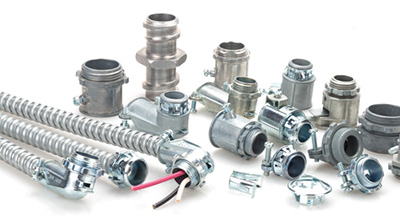
Not necessarily. Conduit and fittings are evaluated separately, and listed products are expected to be installed according to their listing and instructions. When you source Listed conduit, confirm that the connectors and couplings are Listed too, and that they are intended for the conduit type and trade size you are using. Our guide to flexible metal conduit fittings explains the main fitting types and standards.
Quick Checklist Before You Order
-
UL Mark visible on product or packaging
-
File Number provided and found in UL Product iQ
-
Company, factory and product category match
-
Your type and trade sizes are covered
-
Fittings are Listed and compatible
-
Certificate and marking photos kept on file
Source UL Listed Flexible Metal Conduit with Confidence
Kaiflex supplies UL Listed flexible metal conduit and fittings for building, data center, industrial and machinery projects. To receive certificate copies, datasheets or a quotation, contact us at info@flexible86.com or use the Get a quote button.
Frequently Asked Questions
What does UL Listed mean for flexible metal conduit?
UL Listed means the conduit has been tested by UL to the applicable standard and the factory is covered by ongoing UL follow-up inspections. Only then may the manufacturer apply the UL Mark. For flexible metal conduit the standard is UL 1, and for liquid-tight flexible metal conduit it is UL 360.
Which UL standard applies to flexible metal conduit and liquid-tight flexible metal conduit?
UL 1 covers flexible metal conduit (FMC) and UL 360 covers liquid-tight flexible metal conduit (LFMC). Fittings are covered separately, under UL 514B.
How do I check a UL File Number?
Ask the supplier for the File Number, which starts with the letter E, and search it in UL Product iQ. Confirm that the company name, factory location, product category, type and trade sizes match what you are buying.
Is UL certified the same as UL Listed?
Not necessarily. UL certified is a loose phrase that suppliers use in different ways. Ask for the exact classification (Listed, Recognized or Classified) and the File Number, then verify it in UL Product iQ.
Can non-UL flexible metal conduit be used on US projects?
On installations governed by the NEC, flexible metal conduit and its fittings are required to be listed, and inspectors generally look for the UL Mark. Always confirm requirements with the project specification and the local authority having jurisdiction.
Looking for high-fit metal or non-metal conduits and fittings?